
Watering
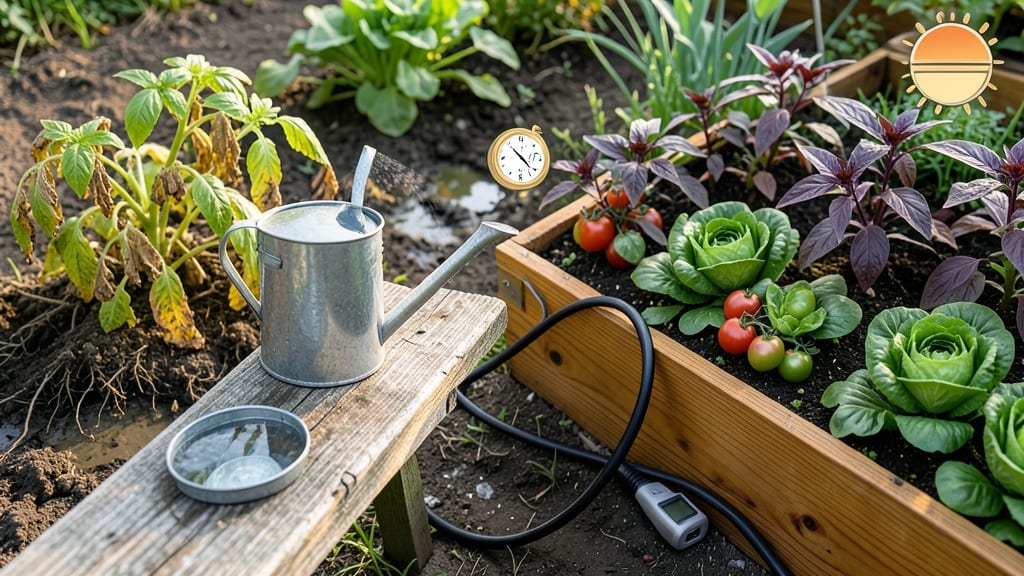
You shouldn't water your garden every day in hot weather, as this practice suffocates roots by blocking oxygen and promotes weak, shallow growth. Instead, water deeply 2-3 times per week to strengthen roots and maintain soil moisture effectively.
Daily watering in extreme heat actually creates more problems than it solves. 💧 When soil stays saturated, it crowds out oxygen that roots need to breathe, while also creating the perfect environment for fungal diseases.
Heat accelerates evaporation, so shallow watering just encourages plants to develop weak root systems near the surface. I've seen gardens where daily watering led to plants that wilted faster because their roots couldn't reach deeper moisture reserves.
What works better is giving your garden a thorough soaking in the early morning. This allows water to penetrate deeply while reducing evaporation losses. For most plants, checking soil moisture with your finger—about 2-3 inches down—is the best indicator.
Some plants like tomatoes and peppers actually prefer slightly drier soil between waterings, while others like lettuce need more consistent moisture. Using mulch around plants helps retain that moisture while keeping roots cool.
💡 In This Article
- How Daily Watering Damages Garden Roots in Heat
- Optimal Watering Schedule for Hot Weather Gardens
How daily watering damages garden roots in heat
When you water daily in hot weather, you're essentially smothering your plant roots. Soil becomes waterlogged, creating an anaerobic environment where oxygen levels drop below 10%—roots need at least 15-20% oxygen to function properly.
This suffocation causes roots to turn brown and mushy, while also preventing them from absorbing nutrients efficiently. The heat makes this worse because it accelerates microbial activity that consumes oxygen even faster, creating a vicious cycle of root stress.
Another hidden consequence is soil compaction. Frequent watering causes clay particles to swell and press together, reducing pore space by up to 40%. This compacted soil acts like a concrete barrier, preventing roots from growing deeper where they can access moisture reserves.
You'll notice plants develop shallow root systems that look more like tangled hair than strong anchors. 🌱 What's even more concerning is how this compaction disrupts the soil's natural capillary action—the process that moves water upward to plant roots.
Heat also transforms your watering routine into a fungal breeding ground. Warm, moist soil becomes a perfect habitat for pathogens like Phytophthora and Pythium, which thrive in saturated conditions. These fungi attack root cells, creating lesions that block water and nutrient uptake.
I've seen gardens where daily watering led to sudden wilting despite the soil appearing wet—this was the telltale sign of root rot progressing unseen below the surface.
The evaporation rate in hot weather makes shallow watering particularly problematic. Water applied daily only wets the top 1-2 inches of soil, while roots may extend 12-24 inches deep. This creates a paradox where plants appear thirsty above ground but have no incentive to grow deeper roots.
The result? Plants become dependent on frequent surface moisture rather than developing the resilient root systems needed to survive drought conditions.
Consider this comparison: A properly watered garden in heat maintains soil moisture at 40-60% capacity, while daily watering can push it to 80-90%—this excess water forces roots to the surface where they're more vulnerable to temperature swings and evaporation.
The key is understanding that plants have evolved to handle periodic dryness, not constant moisture. 💧 What you're doing with daily watering is essentially training your plants to be weak.