
Tools
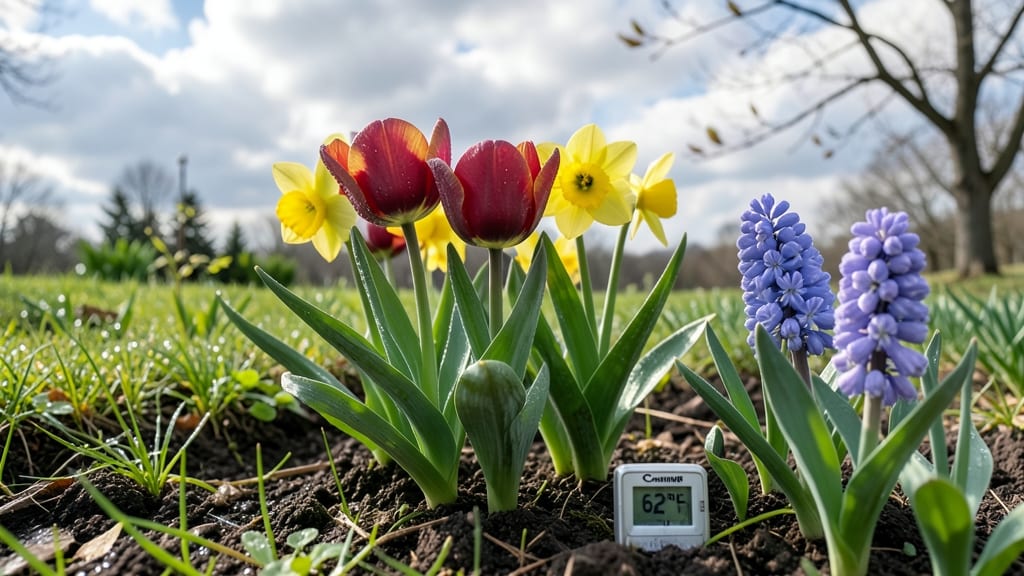
Understanding spring garden weather is essential for planting success, as it directly influences frost-free dates, soil warmth, and moisture availability—critical factors for scheduling vegetable starts, flower beds, and lawn seeding. Always verify local climate trends and account for microclimates to prevent early-season failures.
Spring garden weather creates a delicate balance between opportunity and risk. 🌱 The transition from winter to spring brings warmer air and longer daylight, but unpredictable frost events and fluctuating soil temperatures can derail even the most careful plans.
For example, while the average last-frost date for Zone 6 might be May 15, a cold snap could push it back by two weeks—meaning your tender seedlings might not survive if planted too early.
I recommend using a planting calendar that accounts for your specific hardiness zone and supplementing it with real-time weather data from local sources like the National Weather Service.
Beyond frost dates, soil temperature plays a starring role in spring planting. Most vegetables need soil to reach at least 50°F before they'll germinate properly, while cool-season crops like peas and lettuce can handle 40°F soils.
A soil thermometer is your best friend here—it tells you exactly when conditions are right, rather than relying on guesswork. Don't forget that moisture levels also shift with spring's unpredictable rains; some years bring too much, while others leave soil bone-dry by mid-April.
Adjusting irrigation schedules based on weekly forecasts can save you from overwatering or underwatering your new plants.
💡 In This Article
- How Spring Weather Affects Planting Zones and Frost Dates
- Weather-Proofing Your Spring Garden: Tools and Adjustments
How spring weather affects planting zones and frost dates
Spring weather fundamentally reshapes your planting timeline through frost-free dates, which are calculated based on historical averages of the last expected frost in spring and first frost in fall.
These dates vary dramatically by USDA hardiness zone: Zone 3 (northern climates) typically sees its last frost around May 15-30, while Zone 10 (southern deserts) may never experience frost at all.
The key mechanism here is air temperature inversion—warm air trapping cold air near the ground, which can create localized frost pockets even when daytime temps are mild. This is why microclimates matter so much: a south-facing slope might warm 5-10°F faster than a low-lying area.
Soil temperature adds another critical layer. Most warm-season vegetables like tomatoes and peppers won't germinate until soil reaches 60-65°F, while cool-season crops such as spinach thrive in 45-55°F soils.
The science behind this is enzyme activity: seeds need specific temperature ranges to activate the enzymes that break down their seed coats and initiate growth.
For example, in Zone 5, soil may hit 50°F by late April, but it could take another 2-3 weeks to reach 60°F—meaning you'd risk planting tomatoes too early. A soil thermometer placed 2-4 inches deep gives you the real-time data you need to avoid this common mistake.
Regional variations further complicate timing. Coastal areas often experience delayed last frosts due to ocean currents, while inland regions can warm rapidly after cold fronts pass. For instance, San Francisco's last frost average is March 15, but inland Sacramento might see its last frost by February 15.
Even within a single city, urban heat islands can create 5°F warmer microclimates in downtown areas compared to suburbs.
This is why gardeners in mixed climates should divide their garden into zones based on sun exposure and elevation—your high ground might be ready for planting when your valley areas still face frost risk.
What most gardeners overlook is how moisture levels interact with these temperature factors. Wet soils stay cooler longer due to evaporative cooling—a phenomenon where water absorbs heat as it evaporates, keeping the soil temperature 5-10°F lower than dry soil.
After heavy spring rains, you might see delayed germination because the soil simply hasn't warmed enough. Conversely, drought conditions can cause soil to heat up 20°F faster in direct sunlight.
This is why adjusting irrigation schedules based on weekly forecasts becomes essential—too much water can stall growth, while too little can create stress that makes plants vulnerable to temperature swings.
For annual flowers, the timing window is even narrower. Most annuals need to be planted after the last frost but before 75°F soil temperatures, which can arrive by early May in many regions.
Perennials offer more flexibility since they establish roots before sending up foliage, but even they benefit from planting when soil temps are stable above 50°F.
The 10°F rule is a helpful guideline: if your average last frost is May 10, you might want to wait until May 20 to plant heat-sensitive crops like basil or cucumbers, giving yourself a safety margin for unexpected cold snaps.
Here's a practical tip: use frost-sensitive plants as your canary in the coal mine. For example, planting a row of coleus or impatiens (which won't survive frost) alongside your vegetables gives you a visual warning system.
If these plants start wilting at night, you know frost is likely—and you can cover your garden beds immediately. This simple trick has saved me from losing entire plantings of peppers and eggplants more times than I can count.