
Tools
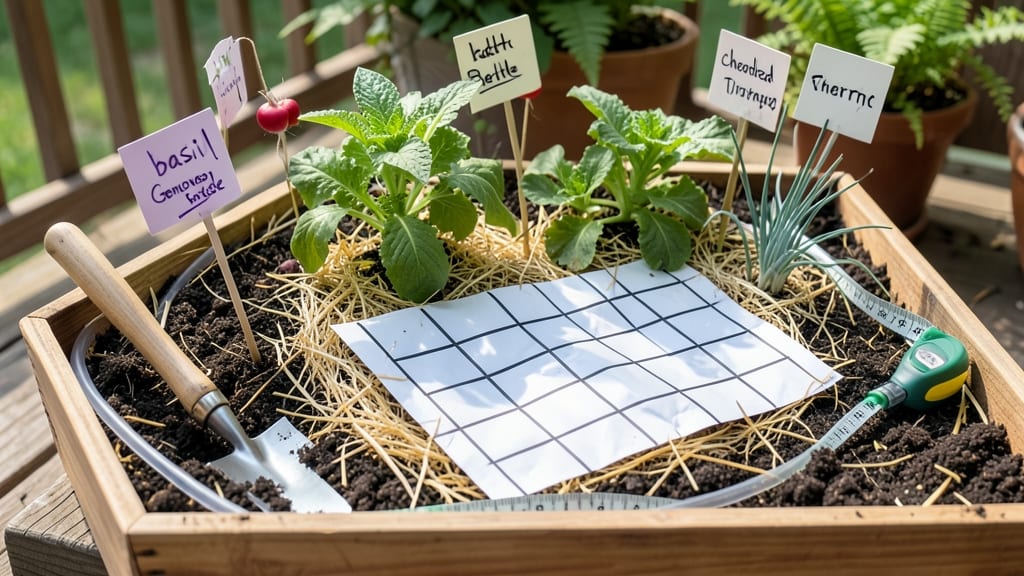
A square foot gardening chart helps you organize space efficiently by matching plant sizes to their mature growth requirements—like giving tomatoes 2 sqft each, lettuce 1 sqft, and radishes 1 sqft in rows. This system maximizes small garden yields by accounting for root spread, sunlight needs, and companion planting dynamics.
A square foot gardening chart isn't just about fitting plants into tiny spaces—it's about creating an ecosystem where each vegetable has room to thrive. 🌱 For example, bush beans only need 1 sqft but grow best in rows, while cucumbers (which sprawl) require 4 sqft unless you train them vertically.
The chart also accounts for how plants interact: basil near tomatoes repels pests, but onions near carrots deter carrot flies. I've found that adjusting spacing by just 6 inches can double your harvest in small gardens.
Beyond the basics, this method lets you rotate crops seasonally to prevent soil depletion. Peppers and eggplants (both 1 sqft) can swap spots with spinach (also 1 sqft) to keep nutrients balanced.
The key is starting with a chart that matches your climate's growing season—some plants like kale need winter protection, while others (like zucchini) bolt in heat.
💡 In This Article
- How Plant Mature Size Determines Square Foot Gardening Spacing
- Customizing Your Square Foot Garden Layout for Maximum Yield
How plant mature size determines square foot gardening spacing
Square foot gardening relies on understanding how plants grow in three dimensions: their root spread, canopy size, and vertical reach. For instance, a single tomato plant can spread its roots 18-24 inches wide while its leaves spread 24-36 inches at maturity.
The 2 sqft allocation accounts for this by giving each plant enough space to access sunlight and nutrients without competing. Overcrowding forces plants to fight for resources, resulting in smaller fruits, weaker stems, and increased disease risk from poor air circulation.
Leafy greens like lettuce and spinach (1 sqft) have shallow roots and compact growth, so they thrive in tight spaces. Their broad leaves, however, need full sunlight to prevent bolting (premature flowering).
In contrast, carrots and radishes (1 sqft per row) grow vertically but require 1-2 inches of soil depth. Planting them too close leads to stunted roots or forked carrots, while proper spacing ensures straight, tender roots.
The science here is simple: root competition reduces yield, while proper spacing maximizes photosynthesis through better light exposure.
Consider how vining plants like cucumbers (4 sqft unless trellised) sprawl aggressively. Their sprawling habit steals sunlight from neighbors, which is why vertical training on a trellis reduces their footprint to 2 sqft. This isn't just about aesthetics—it's about airflow.
Poor circulation creates humid microclimates where fungal diseases thrive. For example, basil (1 sqft) planted near tomatoes improves flavor and repels pests, but if crowded, both plants suffer from powdery mildew due to trapped moisture.
Seasonal growth habits also dictate spacing. Fast-maturing crops like radishes (30 days) can be intercropped with slower growers like kale (60+ days). Radishes mature before kale fills its space, allowing both to coexist harmoniously.
Conversely, planting zucchini (4 sqft) too close to other squash leads to crowded vines and fewer fruits, as the plants divert energy to leaf growth instead of flowering. The chart balances these dynamics by allocating space based on peak maturity, not just early growth.
Visualize this: a 4x4 sqft grid holds 16 plants of 1 sqft crops, but only 8 tomato plants (2 sqft each). The difference? In the first case, you get 16 small lettuces; in the second, 8 large tomatoes—each worth 4-5 lbs at harvest.
The chart transforms guesswork into precision, ensuring your small garden produces maximum yield per square inch.
Here's the practical takeaway: Measure mature plants (not seedlings) when planning. Visit a nursery or check seed packets for "plant spacing" guidelines—these are your blueprint. For example, a bush bean might list 4 inches apart, but in square foot gardening, that translates to 16 plants per sqft (4x4 grid).
The chart simplifies this math, so you don't have to.