
Tools
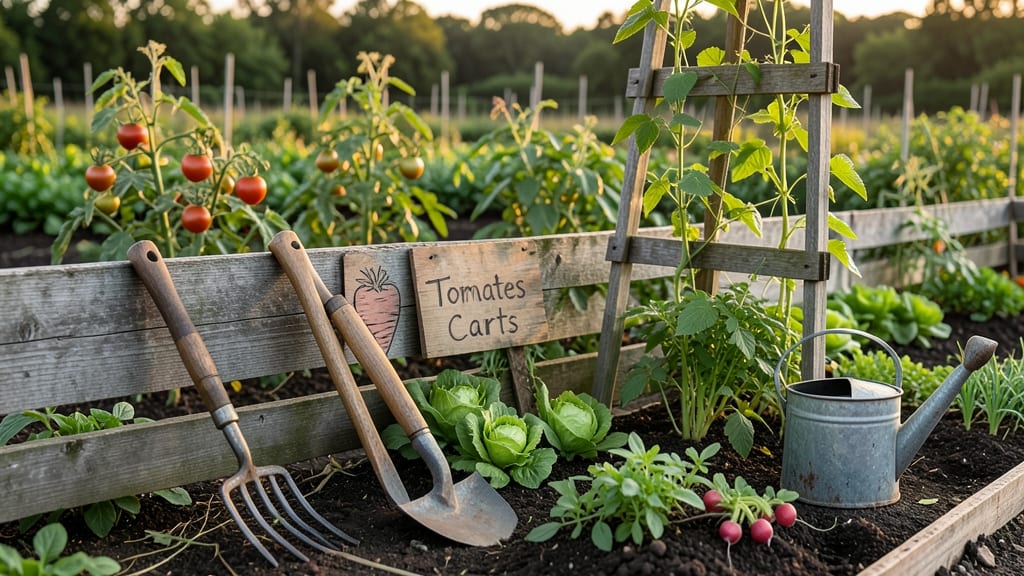
A victory garden definition centers on homegrown vegetable plots created during wartime to boost food supplies, particularly during World War I and World War II, while promoting self-reliance and community strength through gardening.
These wartime gardens weren't just about growing food—they became symbols of national pride. 🌱 During both world wars, the U.S. government actively encouraged citizens to cultivate victory gardens to reduce pressure on commercial food production, which was often diverted to military efforts.
The concept spread globally, with millions of families transforming backyards, rooftops, and even vacant lots into productive growing spaces. What's fascinating is how these gardens evolved from practical necessity into cultural movements, with schools and community groups organizing collective planting efforts to foster unity during challenging times.
The impact extended beyond food security. Victory gardens helped stabilize prices by increasing local food availability and reduced reliance on imported goods, which were often scarce. Many families discovered gardening for the first time, creating lasting traditions that continue to inspire modern urban farming initiatives.
Today, the principles live on in community gardens and backyard plots designed to promote sustainability and food independence.
💡 In This Article
- Origins and Purpose of Victory Gardens in Wartime
- Modern Victory Gardens: Reviving the Concept Today
Origins and purpose of victory gardens in wartime
Victory gardens emerged as a direct response to wartime food scarcity during World War I and World War II. 🌱 The U.S. government launched the first official campaign in 1917 when the Food Administration, led by Herbert Hoover, urged citizens to plant "war gardens" to free up commercial crops for military use.
By 1918, nearly 5 million gardens were producing about 12% of the nation's fresh vegetables. The concept returned in 1942 when the Office of War Information launched "Victory Gardens" with patriotic posters featuring characters like "Old Doc" encouraging families to grow their own.
These gardens served multiple critical functions beyond food production. The 1943 Victory Garden campaign peaked with 20 million gardens supplying an estimated 40% of the nation's vegetables, reducing shipping demands by 10 million tons annually.
The psychological impact was equally significant—gardening provided a tangible way for families to contribute to the war effort while coping with rationing. Studies from the era show that communities with active victory gardens reported higher morale, as the shared effort created a sense of purpose and unity during difficult times.
The government provided extensive support through educational materials, seed distribution programs, and even radio broadcasts featuring gardening tips. For example, the Victory Garden Seed Program distributed 10 million packets of seeds in 1943 alone, with popular crops including tomatoes, potatoes, and cabbage.
What's remarkable is how these gardens adapted to urban spaces—balconies, rooftops, and even window boxes became productive growing areas in cities where backyard space was limited.
One lesser-known aspect was the role of women in victory gardens. With many men serving overseas, women took on gardening responsibilities en masse, breaking traditional gender roles.
The National War Garden Commission actively recruited women through organizations like the American Garden Club, creating spaces where they could learn horticultural skills while supporting the war effort. This participation helped lay the foundation for women's expanded roles in agriculture and community leadership after the wars.
The success of victory gardens wasn't just about quantity—it was about quality. Gardeners learned intensive growing techniques that maximized yields in small spaces. For instance, the square foot gardening method (later popularized in the 1980s) originated from these wartime adaptations.
Victory gardens also demonstrated how diverse crops could be grown in rotation to prevent soil depletion, a principle still used in modern organic farming.
What makes victory gardens particularly fascinating is their dual nature as both practical solutions and cultural phenomena. They transformed ordinary citizens into stewards of their food supply while creating shared experiences that strengthened communities.
The lessons learned—about sustainability, self-sufficiency, and collective action—continue to resonate today as modern gardeners face new challenges like climate change and food insecurity. 💡