
Tools
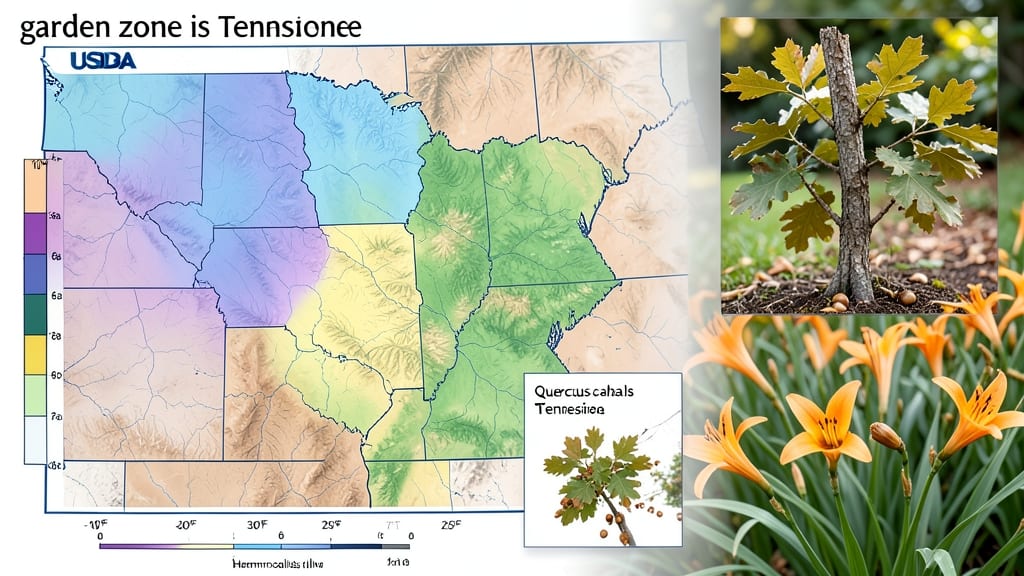
Tennessee's USDA garden zones range from 6a in the Appalachian highlands to 8b in the southern tip, with most areas falling between 7a and 7b. Memphis and Nashville sit in Zone 7a, while higher elevations like the Cumberland Plateau drop to Zone 6a, and Chattanooga extends into Zone 8a.
Understanding Tennessee's USDA planting zones helps gardeners choose the right plants for their specific climate. The state's varied geography—from the Appalachian Mountains to the Mississippi River Valley—creates microclimates that affect frost dates and growing seasons.
For example, Nashville's Zone 7a experiences about 2,400-2,800 growing degree days, while Knoxville's Zone 7b sees slightly warmer conditions. These differences mean that plants thriving in Memphis might struggle in the cooler mountain regions. 🌿
This variation also impacts when to plant. Cooler Zone 6a areas should wait until after the last frost (typically mid-April), while Zone 8b's southern regions can start as early as February.
Knowing your exact zone helps avoid common mistakes like planting tender annuals too early in colder areas or struggling with heat-sensitive crops in the hottest regions.
💡 In This Article
- How Tennessee’s Geography Shapes Its USDA Planting Zones
- Best Plants for Tennessee’s USDA Zones by Region
How Tennessee’s geography shapes its USDA planting zones
Tennessee’s diverse geography creates a patchwork of microclimates that directly influence its USDA planting zones. The state’s elevation ranges from sea level along the Mississippi River to over 6,600 feet in the Appalachian Mountains, where temperatures drop significantly.
This elevation gradient causes a 10-15°F difference between mountain valleys and river valleys—enough to shift zones by an entire letter. For example, the Cumberland Plateau in northeastern Tennessee sits in Zone 6a, while the adjacent Nashville Basin just 50 miles away enjoys Zone 7a’s milder winters.
The Appalachian Mountains act as a natural barrier, trapping cold air in higher elevations and creating colder microclimates. Meanwhile, the Cumberland Plateau’s rocky terrain and dense forests create cooler, drier conditions compared to the humid river valleys.
Urban areas like Nashville and Memphis also experience urban heat islands, where pavement and buildings raise temperatures by 2-5°F compared to rural areas, pushing these cities slightly into higher zones than surrounding farmland.
This urban effect explains why downtown Nashville might support Zone 7b plants while nearby countryside remains firmly in 7a.
Latitude plays a key role too—southern Tennessee’s proximity to the Gulf Coast means longer growing seasons and fewer frost days. Chattanooga’s Zone 8a status reflects this, with average last frost dates around March 15, compared to Knoxville’s Zone 7b average of April 1.
The Mississippi River Valley’s flat terrain allows warm air to pool, creating the state’s hottest microclimates. These geographic factors explain why a single 100-mile drive through Tennessee can take you from Zone 6a’s frost-prone mountains to Zone 8b’s subtropical pockets.
Understanding these geographic influences helps gardeners make precise plant selections. For instance, Zone 6a’s shorter growing season favors cold-hardy perennials like heuchera and Russian sage, while Zone 8b’s longer heat waves demand drought-tolerant choices like yucca or agave.
The state’s varied topography means what thrives in Memphis might fail in Gatlinburg—making zone knowledge essential for successful gardening. 🌄
Even within the same zone, local conditions vary dramatically. A north-facing slope might experience 2-3 weeks earlier frost than a south-facing hillside just 100 feet away. This is why precise zone mapping—down to the street level—becomes crucial for serious gardeners.
Tennessee’s USDA zone map isn’t just about broad regional categories; it’s a reflection of how topography, urbanization, and latitude combine to create one of the most geographically diverse gardening landscapes in the Southeast.
What most gardeners overlook is how these geographic factors interact with soil types. The nutrient-rich clay soils of the Cumberland Plateau support different plant communities than the sandy loams of West Tennessee.
This soil-climate combination means even within the same zone, your planting success depends on understanding both your USDA zone AND your local soil characteristics. The interplay creates Tennessee’s unique gardening challenges—and opportunities. ✨