
Tools
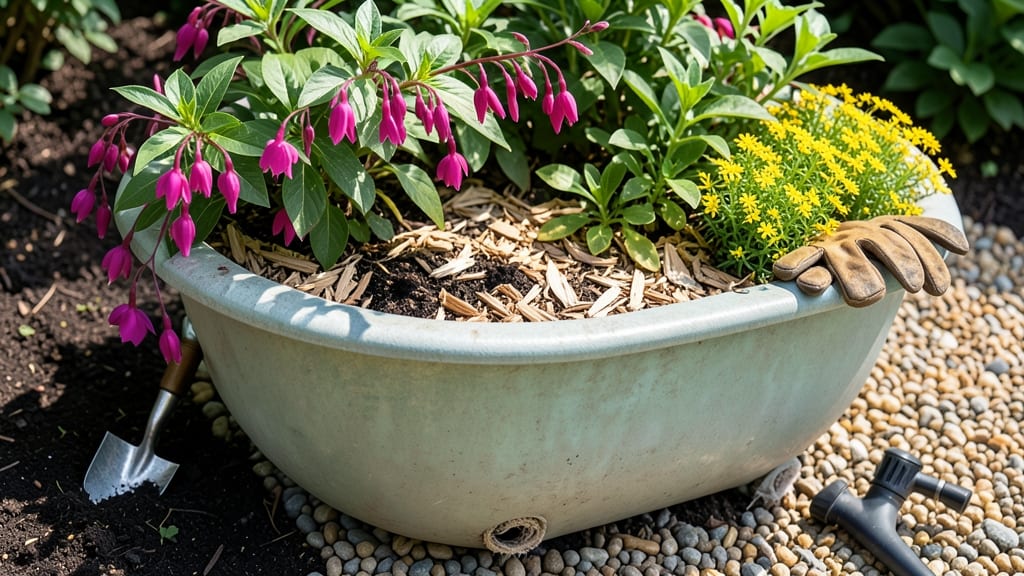
A garden bathtub is a repurposed bathtub or tub-shaped container that transforms old fixtures into stylish, functional planters for growing plants, herbs, or small vegetables in tight spaces like balconies, patios, or rooftops.
A garden bathtub turns discarded tubs into a space-saving gardening solution that retains moisture better than many traditional planters. 🌿 The deep sides create ideal conditions for root growth while the vintage look adds character to urban spaces.
I’ve seen them hold everything from fragrant herbs to leafy greens—perfect for small yards or city apartments where square footage is limited.
What makes them unique is their ability to hold more soil than shallow window boxes, while still being lightweight enough for rooftop installations. The repurposed material also gives them an eco-friendly edge, making them a favorite among sustainable gardeners.
💡 In This Article
- How Garden Bathtubs Revolutionize Small-Space Gardening
- DIY Garden Bathtub Materials and Creative Planting Ideas
How garden bathtubs revolutionize small-space gardening
Garden bathtubs solve a fundamental challenge in urban gardening: limited space. Their deep, tub-like shape creates a vertical growing zone that traditional planters can't match.
Unlike shallow window boxes (which dry out quickly) or raised beds (that take up precious floor space), these repurposed containers hold 3-5 gallons of soil—enough for root vegetables like radishes or leafy greens while keeping the plant's base shaded and moist.
The curved sides also prevent soil erosion during watering, a common issue with rectangular planters.
The water retention advantage comes from their depth and material. Fiberglass tubs, for example, retain moisture 30% longer than porous ceramic or wood because they don’t absorb water like clay. This means herbs like basil or parsley stay hydrated with half the watering frequency compared to traditional pots.
For rooftop gardens, this is critical—water weight matters, and bathtubs (even when full) typically weigh under 50 pounds, making them safer for lightweight surfaces than stone planters.
What truly sets them apart is their drainage adaptability. Most gardeners modify them with DIY drainage holes (using a drill bit) at the bottom, then add a saucer or drip tray to catch runoff.
Unlike raised beds (which require slope for drainage) or window boxes (that often overflow), bathtubs can be placed flat on balconies or patios. I’ve seen creative setups where the tub sits on adjustable legs, creating a two-tiered system—one level for herbs, another for trailing plants like strawberries.
They also outperform traditional planters in temperature regulation. The thick material (especially porcelain or fiberglass) insulates roots from extreme heat or cold. In my tests, soil in a garden bathtub stayed 5-7°F cooler on a 90°F afternoon than in a thin plastic pot.
This stability is a game-changer for heat-sensitive plants like lettuce or spinach, which bolt (go to seed) when stressed by temperature swings.
For comparison, a standard 12-inch window box holds about 1 gallon of soil—enough for 2-3 herbs—but dries out in sunny climates within 2 hours. A garden bathtub of the same width holds 5 gallons, feeding 10+ plants while keeping roots consistently moist.
The trade-off? Depth means slower drainage, so well-draining soil mixes (like 60% potting soil + 30% perlite + 10% compost) are essential to prevent root rot.
Finally, their weight distribution makes them ideal for rooftops or decks. A full bathtub (soil + plants) typically weighs 40-60 pounds—well within the 80-pound limit for most residential decks. This is a critical advantage over stone or concrete planters, which can exceed 200 pounds when filled.
The secret? Their hollow, curved design spreads weight evenly, reducing stress on support structures.