
Tools
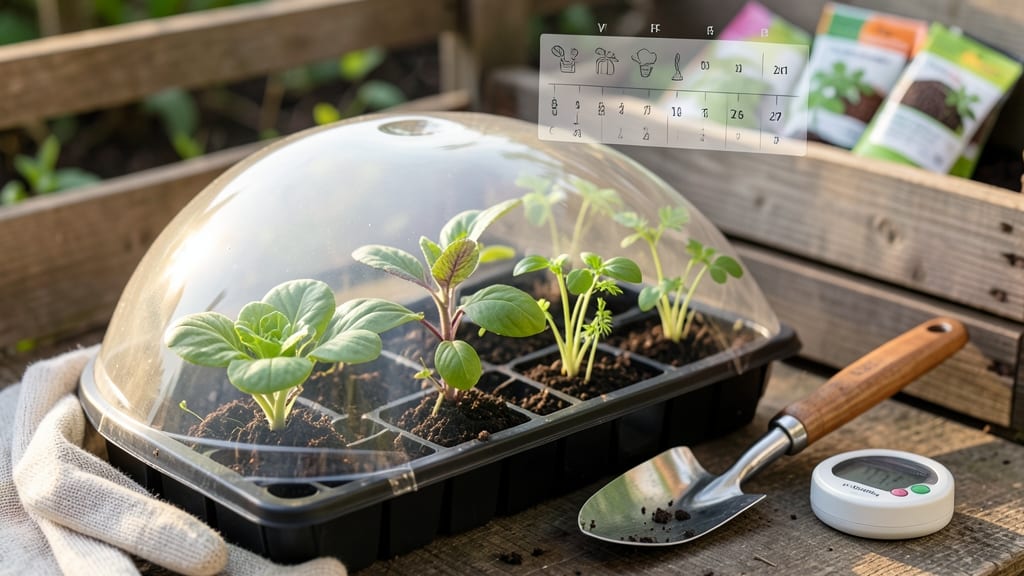
The best time to start planting a garden depends on your USDA hardiness zone: sow cool-season crops (like lettuce or peas) 4-6 weeks before last frost, and warm-season crops (such as tomatoes or peppers) 2-3 weeks after last frost. Check local frost dates and soil temperatures for precise timing.
Timing your garden planting isn't just about dates—it's about matching your plants' needs with your climate.
Cool-season crops thrive in milder temperatures, while warm-season varieties like tomatoes crave consistent warmth. 🌱 I always check my local agricultural extension's frost predictions, as even a few degrees difference can mean the difference between a thriving garden and struggling seedlings.
For example, in Zone 5, you might start peas in early April, but wait until mid-May for tomatoes, when soil temperatures consistently stay above 50°F.
Soil temperature is just as critical as air temperature—most seeds need soil that's at least 40°F for cool-season crops and 60°F+ for warm-season varieties. A simple soil thermometer (just $10) can save you from planting too early and risking frost damage.
Pro tip: If you're in doubt, opt for cold-hardy varieties or use row covers to extend your growing season.
💡 In This Article
- Understanding USDA Planting Zones and Frost Timelines
- Zone-Specific Planting Calendars for Common Vegetables
Understanding USDA planting zones and frost timelines
Your USDA hardiness zone—those numbered regions from 1 to 11—actually maps to average annual minimum temperatures, but they're the foundation for predicting when frost will occur. Each zone represents a 10°F difference in winter lows, which directly correlates with when your soil warms enough for planting.
For example, Zone 3 (think Minnesota or northern New England) has last frost dates around May 15, while Zone 9 (Southern California or Florida) might see its final frost in January—meaning you can plant warm-season crops months earlier. 🌡️
The real magic happens at 32°F, the freezing point where ice crystals form inside plant cells, rupturing delicate seedlings. Most gardeners track the "last frost date" (when temperatures dip below 32°F fewer than 5% of years), but soil temperature is equally critical.
Seeds need warmth to activate enzymes that trigger germination—cool-season crops like spinach germinate at 40°F, while tomatoes require 60°F+. A 10°F soil temperature swing can delay germination by 2-3 weeks.
Here's how to find your exact planting window: Start with the USDA zone map, then cross-reference with your local agricultural extension's frost data (they track microclimates better than generic maps).
For instance, a valley might be Zone 7, but its frost dates could align with Zone 6 due to cold air pooling. 🌿 Pro tip: Use a soil thermometer for 7-10 days before planting—if readings dip below 50°F at night, wait.
Many gardeners also use row covers to extend cool-season planting by 2-4 weeks.
What most people overlook is how frost timing varies even within a zone. Coastal areas (like San Francisco) have milder winters than inland zones at the same latitude, while urban heat islands can push last frost dates 1-2 weeks later than rural areas.
For example, Chicago (Zone 5) might see frost until May 20, but downtown's concrete absorbs heat, potentially allowing earlier planting for heat-tolerant crops like basil.
Seed viability also ties to frost timing—most seeds last 1-5 years in storage, but viability drops sharply after exposure to moisture or temperature fluctuations. That's why I always check seed packets for "days to germination" at different soil temps.
For instance, broccoli seeds may sprout in 4-6 days at 70°F but take 10-14 days at 50°F. Planting too early means waiting longer for harvests, and some crops (like onions) won't bolt if sown at the right time but exposed to heat later.
For container gardens, timing shifts slightly—pots warm up faster than soil, so you can plant 1-2 weeks earlier than in-ground. However, shallow roots make containers more vulnerable to temperature swings.
I've found that black plastic pots absorb 20% more heat than terracotta, which can be a game-changer for extending seasons in cooler zones. 🌱