
Propagation
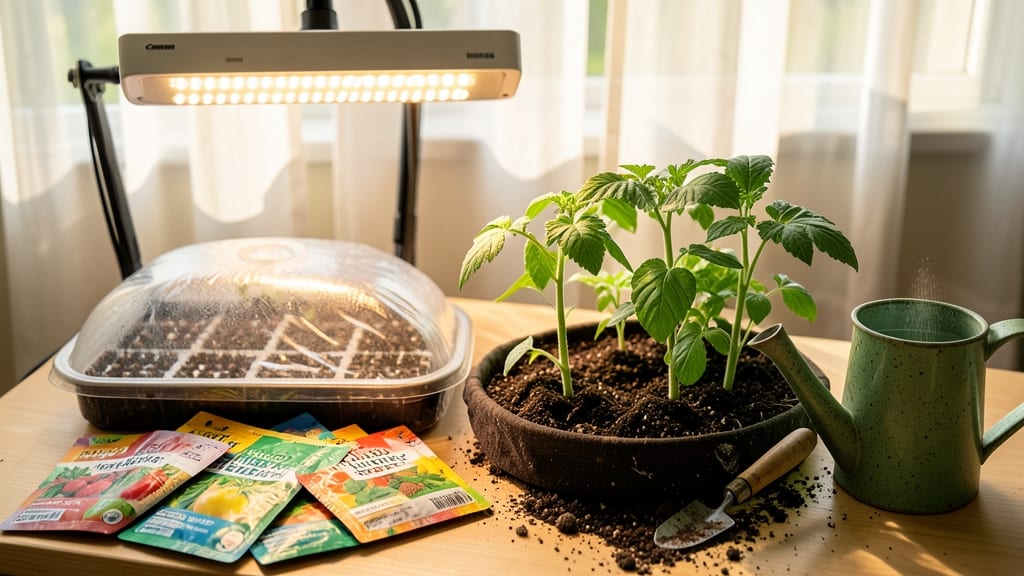
To start seeds for a spring garden, calculate your last frost date and plant type: fast-growing greens like lettuce begin indoors 4-6 weeks before frost, while cool-season crops such as broccoli need 6-8 weeks, and warm-season plants like tomatoes should start 2-3 weeks before frost or be direct-sown after it.
Timing your seed starts means balancing your local climate with each plant's growth rate. Cool-season crops like kale and spinach thrive when sown early, often 8-10 weeks before the last frost, while warm-season plants like peppers and cucumbers need soil temperatures above 50°F to germinate properly.
I've learned that checking seed packets for "days to maturity" helps avoid overcrowding—some varieties need more indoor time than others. 🌱
For example, if your last frost is April 15, you'd start lettuce seeds around February 15, broccoli by January 15, and tomatoes only in March. This prevents seedlings from becoming leggy or bolting too early.
Pro tip: Use a seed-starting chart to track progress and adjust for your specific USDA zone.
💡 In This Article
- Calculating Seed Starting Dates by Frost Zones
- Best Indoor vs Outdoor Seed Starting Methods for Spring Plants
Calculating seed starting dates by frost zones
Your last frost date isn't just a calendar marker—it's the biological trigger for when soil temperatures and daylight length become safe for specific plants. The USDA divides zones by average minimum winter temperatures, but what matters for seed starting is the average last frost date in your area.
For example, Zone 5 (average last frost: May 10) needs earlier starts than Zone 8 (average last frost: March 15). This 6-week difference means broccoli seeds in Zone 5 must begin by March 10, while Zone 8 gardeners can wait until February 1. 🌡️
The science behind this timing involves three critical factors: soil warmth, daylight hours, and seed-specific germination thresholds. Most cool-season crops (like spinach) germinate best at 60-70°F soil temps, while warm-season plants (like peppers) need 75-85°F.
Your local frost date indirectly tells you when soil will reliably reach these thresholds—typically 2-4 weeks after the last frost. Daylight length also matters: 12+ hours of light prevents leggy seedlings, which is why starting too early (before February 1 in northern zones) often requires grow lights.
Here's how to calculate your exact window: Find your last frost date (check local weather records or USDA maps), then subtract the days to maturity listed on seed packets.
For instance, if basil takes 60 days to harvest and your frost is May 15, you'd start seeds by March 15. However, basil needs warm soil, so you might delay until soil reaches 70°F—often 2-3 weeks after your last frost.
This two-step calculation prevents bolting (flowering too early) in sensitive plants.
Zone variations create unique challenges. In Zone 3 (-30°F winters), gardeners often use heat mats to jumpstart germination, while Zone 10 growers (30°F winters) can direct-sow many crops year-round. The key is matching your zone's growing season length to each plant's needs.
For example, bush beans (60-day harvest) suit short seasons, while sweet corn (90+ days) works only in Zones 5+ with early starts. 🌱
Pro tip: Use a seed-starting calculator (like Johnny's Selected Seeds') to input your zip code and plant type—it accounts for local microclimates and soil conditions.
These tools reveal why your neighbor's tomatoes thrive while yours struggle: their garden might face 5°F warmer microclimates due to urban heat islands or southern exposures. Always verify with 3 years of local frost data—climate change has shifted many last frost dates 1-2 weeks earlier in recent decades.
Remember that direct-sowing (planting seeds outdoors) has different rules. Cold-hardy crops like peas can go in 2-4 weeks before last frost, while tender plants like cucumbers wait until soil is 60°F+—often 2 weeks after frost.
This explains why some gardeners sow lettuce indoors in January but wait until April to plant tomatoes directly. The frost date is your anchor, but soil temperature is the real gatekeeper. ✨