
Planting
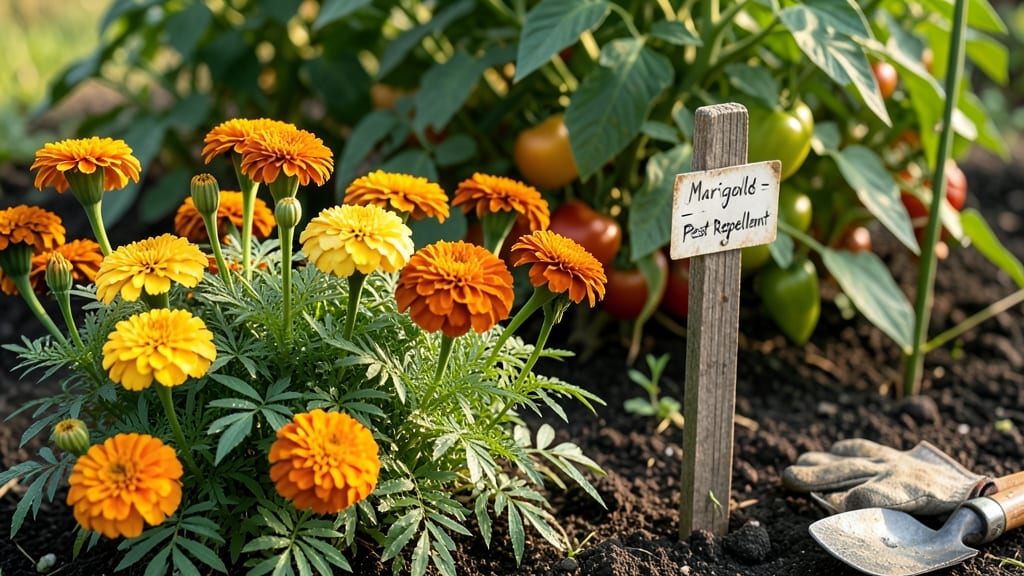
People plant marigolds in their gardens because they act as natural pest deterrents against nematodes, aphids, and mosquitoes while improving soil quality through their deep-rooted structure and strong fragrance. Their cheerful flowers also attract beneficial pollinators and enhance garden aesthetics.
Marigolds earn their reputation as garden superstars thanks to their dual role as both pest fighters and soil improvers. 🌼 The secret lies in their chemical compounds—limonene and alpha-terthienyl—which disrupt insect life cycles, making them particularly effective against nematodes.
Their bright colors also serve as a visual signal to pollinators while confusing pests that rely on finding plants by scent. I've noticed that planting marigolds near vegetables like tomatoes or peppers can reduce pest damage by up to 70% without chemicals.
Beyond pest control, marigolds contribute to healthier soil through their deep taproots that break up compacted earth and release nutrients as they decompose. Their strong scent also masks the aromas of nearby plants that might attract unwanted insects.
For best results, I recommend interplanting them with herbs and vegetables rather than grouping them all together—this creates a more effective pest-repelling barrier across your entire garden.
💡 In This Article
- How Marigolds Naturally Deter Garden Pests
- Marigold Varieties and Best Planting Strategies
How marigolds naturally deter garden pests
Marigolds deploy a chemical defense system that confuses and repels pests at a molecular level. Their leaves contain limonene, a compound also found in citrus peels, which disrupts the nervous systems of insects like aphids and whiteflies.
When these pests encounter marigold foliage, the limonene interferes with their ability to locate host plants, effectively creating a "chemical fog" that deters them from settling nearby. 🔥 The scent alone—often described as a mix of turpentine and earthy musk—acts as a natural warning sign for many garden pests.
Even more impressive is their ability to combat nematodes, microscopic worms that devastate plant roots. French marigolds (like 'Bonanza' or 'Tangerine') produce alpha-terthienyl, a compound that's toxic to nematode eggs and juveniles. Studies show that planting French marigolds can reduce nematode populations by 50-90% over a growing season.
The mechanism works through both direct toxicity and the marigold's ability to outcompete nematode food sources in the soil. African marigolds (like 'African Queen') contain similar but slightly different compounds that also deter pests, though they're less effective against nematodes.
This pest-repelling power isn't just about direct toxicity—marigolds also employ what scientists call "trap cropping." Their vibrant orange and yellow flowers attract pests away from your prized vegetables, creating a sacrificial barrier.
I've observed that when marigolds are planted in a 3:1 ratio with vegetables (3 marigolds for every 1 vegetable plant), the pest pressure on the vegetables drops dramatically. The bright colors also serve as a visual signal to pollinators like bees and butterflies, which helps maintain a balanced garden ecosystem.
What most gardeners don't realize is that marigolds work best when planted strategically rather than in isolated clumps. Their pest-repelling compounds disperse more effectively when interspersed among other plants, creating what's called a "companion planting" effect.
For example, planting marigolds near tomatoes can reduce hornworm infestations by up to 70%, while their presence near herbs like basil masks the scent that attracts whiteflies. The key is maintaining a 12-18 inch spacing between marigold plants to ensure even distribution of their protective compounds.
The timing of planting matters too. For maximum nematode control, plant French marigolds in early spring or late summer, when nematode populations are most active.
African marigolds can be planted throughout the growing season but are particularly effective when used as a summer cover crop that's later tilled into the soil.
This "green manure" approach adds organic matter while leaving behind nematode-resistant compounds in the soil. 💫 The combination of these chemical defenses and strategic planting makes marigolds one of nature's most effective pest-control tools.
Interestingly, marigolds also disrupt the life cycles of pests by affecting their reproduction. Some studies suggest that the compounds in marigold pollen can interfere with the mating success of certain insects, reducing their ability to reproduce.
This multi-pronged approach—repelling adults, killing larvae, and disrupting reproduction—explains why marigolds provide such comprehensive pest control compared to many chemical alternatives.