
Flowers
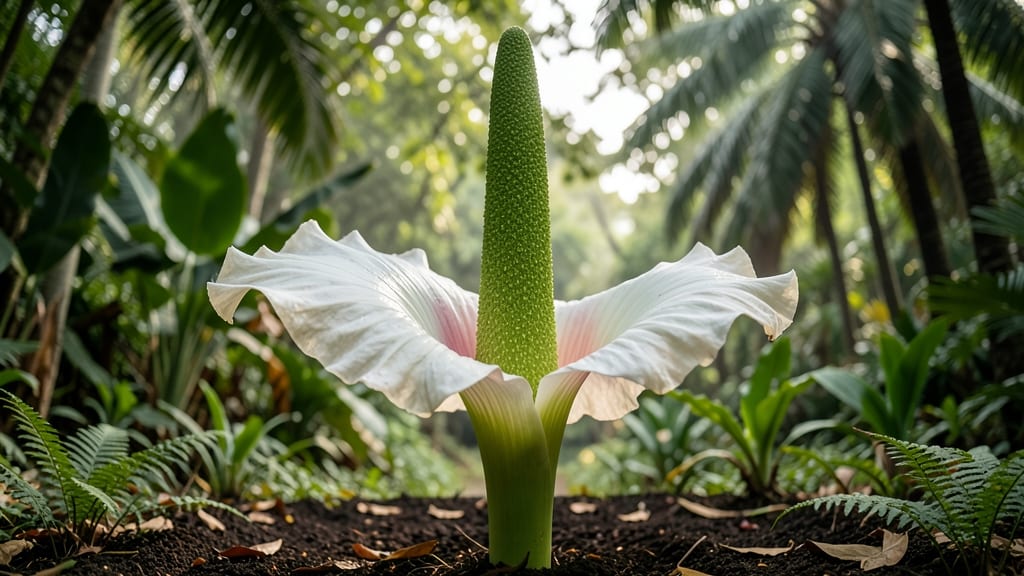
Visiting botanic gardens for the corpse flower is a rare treat—these plants bloom unpredictably every 7 to 10 years, with flowers lasting just 24 to 48 hours and filling the air with a pungent rotting scent to lure pollinators. Sign up for bloom alerts at your nearest garden, as timing depends on the plant's maturity and local climate conditions.
Botanic gardens cultivate the corpse flower (Amorphophallus titanum) because its blooming cycle is so irregular that even experts can't predict it perfectly. 🌱 The plant stores energy for years in its corm—a massive underground tuber—before suddenly bursting into bloom, often triggered by warm temperatures and high humidity.
This makes each sighting a once-in-a-lifetime experience for most visitors, especially since the flower's scent, described as a mix of rotting meat and onions, can be overpowering but fascinating.
Major gardens like the New York Botanical Garden or Singapore Botanic Gardens have hosted famous blooms, drawing crowds from around the world. The challenge? Securing a viewing spot often requires advance planning—some gardens even sell timed-entry tickets or release special passes for the event.
I always recommend checking the garden's website or social media for real-time updates, as bloom announcements can happen with just weeks' notice.
💡 In This Article
- Understanding the Corpse Flower’s Blooming Cycle and Triggers
- How to Track Corpse Flower Blooms at Major Botanic Gardens
Understanding the corpse flower’s blooming cycle and triggers
The corpse flower's blooming cycle is governed by a fascinating biological strategy called determinate growth. Unlike annual plants that bloom yearly, this species stores energy in its corm—a massive underground tuber that can weigh up to 150 pounds—for decades before allocating resources to a single, dramatic bloom.
The corm acts like a biological battery, converting starches into sugars that fuel the flower's rapid growth when conditions are optimal. 🌱
Temperature and humidity serve as the primary triggers. Research from the Fairchild Tropical Botanic Garden shows that blooms often occur when daytime temperatures reach 80-85°F and humidity exceeds 70%—conditions that mimic its native Indonesian rainforest habitat.
Some gardens, like the Singapore Botanic Gardens, use controlled greenhouse environments to simulate these conditions, while others rely on natural seasonal shifts. The plant's internal clock also plays a role, with studies suggesting hormonal signals accumulate over years before triggering the bloom.
What makes the timing so unpredictable is the plant's energy conservation strategy. The corpse flower prioritizes growth over reproduction until it reaches a critical mass—typically between 5 to 15 years old, though some specimens bloom as late as their 30th year.
This delayed maturation ensures the plant can produce a flower large enough (3-4 feet tall) to attract pollinators from miles away using its infamous scent.
The scent, produced by volatile organic compounds like dimethyl disulfide (found in rotting meat), mimics the aroma of decaying animals to lure carrion flies—its primary pollinators.
Botanic gardens employ different strategies to manage these rare events. Some, like the New York Botanical Garden, maintain multiple corpse flowers at various maturity stages to increase bloom frequency, while others focus on creating ideal microclimates.
The Chicago Botanic Garden, for example, uses specialized ventilation systems to control scent dispersion during blooms, ensuring visitors experience the aroma without overwhelming nearby areas. These adaptations highlight how gardens balance scientific curiosity with visitor experience.
Interestingly, the corpse flower's blooming cycle isn't just about size—it's also about timing relative to pollinator activity. Flowers typically open in the afternoon when carrion flies are most active, then close within 24-48 hours as energy reserves deplete.
This rapid turnover explains why even nearby plants may bloom years apart—they're not competing for resources but rather optimizing for pollinator availability during their individual bloom windows. 🌿
For gardeners curious about cultivating their own corpse flower, remember that patience is key. The plant requires tropical conditions year-round, with temperatures never dropping below 60°F, and a corm that can take years to mature.
Most botanic gardens source their specimens from specialized nurseries that have spent decades growing them from seed—a process that begins with a single, pea-sized seed that may take a decade just to produce its first leaf.