
Light Requirements
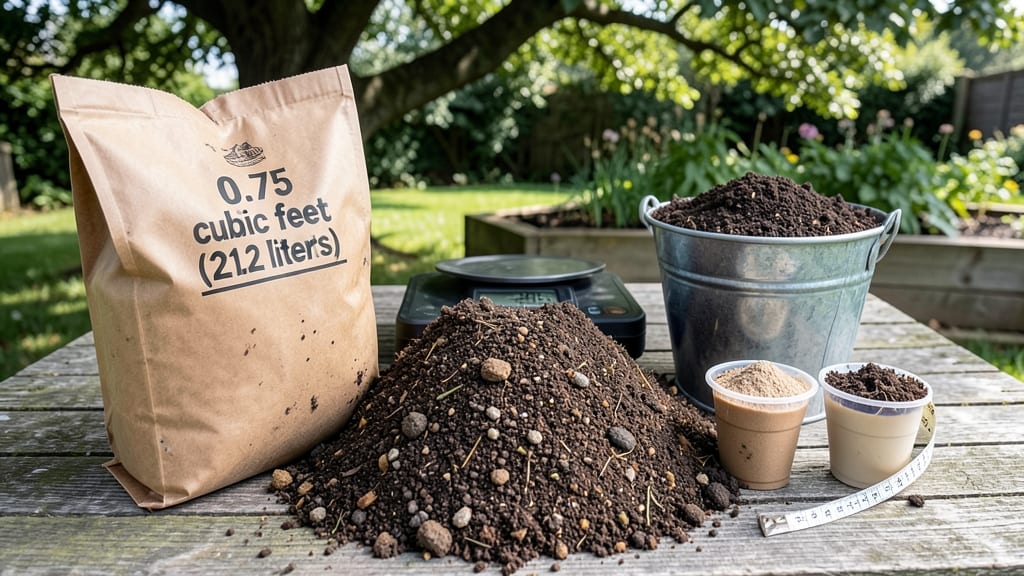
To determine how much 0.75 cubic feet of garden soil weighs, expect 25 to 40 pounds depending on soil type (clay, loam, sandy) and moisture content—drier, sandy soil leans lighter, while dense, wet clay soil can exceed 40 pounds per 0.75 ft³.
Soil weight varies dramatically based on its composition and moisture levels. 🌱 Sandy soil, with its larger particles, typically weighs closer to 25 pounds per 0.75 cubic feet when dry, while clay soil—packed with tiny particles—can reach up to 50 pounds when saturated.
Even a small change in moisture content can shift the weight by several pounds, so always account for recent rainfall or irrigation when planning your gardening projects. For example, a wheelbarrow load of moist loam soil will feel significantly heavier than the same volume of dry, crumbly topsoil.
Understanding these variations helps you choose the right equipment and plan for safe lifting. Whether you're filling raised beds or transporting soil to new garden spots, knowing the weight ensures you avoid back strain and material fatigue.
Always test a small batch first to gauge the actual weight in your specific conditions.
💡 In This Article
- Soil Density Variations: Why Weight Differs by Type
- Practical Weight Estimates for Gardening Projects
Soil density variations: why weight differs by type
The weight of garden soil in a 0.75 cubic feet volume is primarily determined by its particle composition and porosity.
Sandy soil, with its large, loosely packed grains, has a bulk density of about 100 pounds per cubic yard (or roughly 3.75 pounds per cubic foot), making it the lightest option. This means your 0.75 cubic feet of dry sand would weigh around 28 pounds.
The larger air pockets between particles reduce overall density, while the rough texture of sand grains prevents tight packing.
In contrast, clay soil packs tightly due to its microscopic plate-like particles that stick together when wet. With a bulk density of 130-150 pounds per cubic yard, clay soil can weigh 48-56 pounds per 0.75 cubic feet when saturated.
The key difference lies in how water fills the microscopic gaps between particles—clay can hold 40-50% more water than sand, dramatically increasing weight. Loam, the ideal garden soil mix, falls between these extremes with 110-130 pounds per cubic yard, typically weighing 32-40 pounds per 0.75 cubic feet.
Organic matter content also plays a surprising role. Compost-amended soil can weigh 10-15% less than mineral soil because organic particles are less dense. For example, a 0.75 cubic feet volume of 50% compost blend might weigh only 22-28 pounds—lighter but with better moisture retention.
This is why gardeners often mix soil types to balance weight and fertility. The trade-off? Organic soils may compress over time, reducing their volume and increasing density.
Moisture content is the wild card that can shift weights by 20-30% overnight. A 0.75 cubic feet sample of dry loam at 5% moisture might weigh 30 pounds, but after a rainstorm (raising moisture to 25%), the same volume could hit 45 pounds.
This is why professional landscapers always test soil moisture before estimating loads. The difference isn't just about carrying capacity—it affects how soil behaves when tilled or planted.
Here's how the numbers break down for common soil types in 0.75 cubic feet:
- Sandy soil (dry): 25-30 pounds (particles too large to hold much water)
- Loamy soil (moderate moisture): 30-40 pounds (balanced particle distribution)
- Clay soil (saturated): 45-55 pounds (water fills microscopic gaps)
- Organic-rich soil (50% compost): 22-28 pounds (lighter but more fertile)
The science behind these variations lies in soil's bulk density—the mass of dry soil per unit volume. Clay's high bulk density comes from its 1:1 clay mineral structure, while sand's low density results from its 2:1 sheet silicate arrangement that creates more air space.
Understanding these differences helps you predict how much your soil will weigh in different conditions, whether you're filling containers or planning heavy lifting.