
Pruning
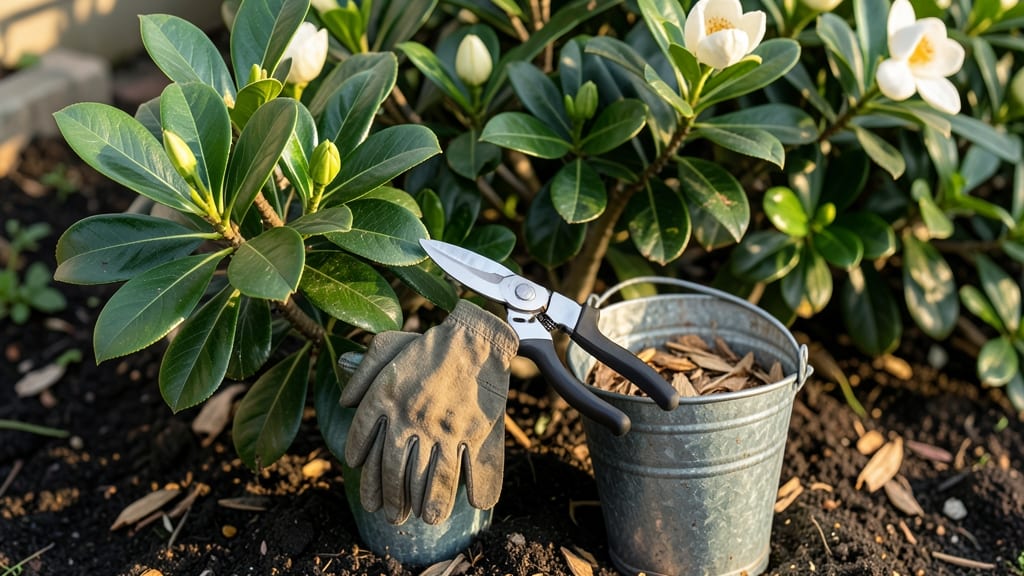
Pruning gardenias in Georgia at the right time ensures frost-free blooms and healthier plants, with late winter being the ideal window before new growth starts.
Picture this: you’ve just trimmed your 🌸 gardenias in early spring, only to watch frost nip the fresh buds overnight. That’s why timing matters—Georgia’s 7b-9a zones demand precision. Prune too early, and you risk stunting growth; too late, and you cut off next year’s flowers.
Most gardeners in Georgia wait until February or early March, after the last frost date but before buds swell. This timing aligns with the plant’s natural cycle, giving it time to recover before summer’s heat sets in.
Below, I’ll break down the exact 2-3 week window to prune, how to check for frost risk in your area, and the tools you’ll need for clean cuts. Let’s get those gardenias blooming like clockwork.
Best late winter pruning window for Georgia gardenias (with frost risk timeline)
Georgia gardenias thrive in our warm climate, but their pruning schedule depends on avoiding late winter frosts that can damage tender new growth. The ideal window opens in late February and closes by mid-March, just before your region’s average last frost date.
This timing ensures your gardenias wake from dormancy with energy to produce abundant blooms all summer.
In USDA Zones 7b-8a (covering most of Georgia), the last frost typically occurs between February 28 and March 15, with Atlanta’s metro area leaning toward the later date.
Meanwhile, Savannah and coastal regions often see their last frost by mid-February, giving gardeners there a slightly earlier window to prune safely.
To pinpoint your exact pruning window, I recommend checking the National Oceanic and Atmospheric Administration (NOAA) frost prediction maps or your local Cooperative Extension Service website. These resources provide hyperlocal frost risk data that can shift your timing by days—critical for Georgia’s unpredictable weather patterns.
Once you’ve confirmed your frost-free date, aim to prune 2-3 weeks before the average last frost. This gives your gardenia’s new growth time to harden off before potential cold snaps.
For example, if your last frost is March 10, prune between February 20 and February 25 to balance safety and bloom potential.
Look for dormant buds along your gardenia’s branches—they’ll appear as tiny swellings. Pruning at this stage removes last year’s spent blooms while encouraging the plant to focus energy on fresh, vigorous growth.
Avoid pruning after March 15, as new growth may not have time to mature before summer’s heat sets in.
If you’re unsure about your local frost date, use the 34°F threshold as your guide. Gardenias can tolerate brief cold snaps down to this temperature, but prolonged exposure risks bud damage. Set up a minimum/maximum thermometer near your gardenias to track overnight lows and adjust your timing accordingly.
For gardeners in warmer microclimates (like urban Atlanta or Savannah backyards), you might prune as early as mid-February. However, be cautious—pruning too early can stimulate growth that gets burned back by unexpected frosts. Always err on the side of waiting a few extra days for clarity.
After pruning, give your gardenia a light feeding with an acid-loving plant fertilizer (like 10-10-10) to support new growth. Apply a 2-3 inch layer of mulch around the base to retain moisture and regulate soil temperature as the weather warms.
Remember: Pruning gardenias isn’t about drastic cuts—focus on shaping the shrub and removing dead or crossing branches. Over-pruning can reduce next year’s blooms, so aim to remove no more than 20-30% of the plant’s foliage in any single session. 🌸
Step-by-step pruning guide: how to shape gardenias for more blooms
Pruning your gardenias correctly is the secret to lush blooms and a neat, healthy shrub. Unlike many plants, gardenias bloom on new wood, so timing and technique matter.
I’ll walk you through the exact steps—from tools to cuts—to ensure your Georgia gardenia thrives after pruning. Avoid these mistakes, and you’ll see more fragrant flowers next season!
Start with the right pruning tools. Use clean, sharp bypass pruners for thin branches and loppers for thicker stems. Sterilize tools with rubbing alcohol to prevent disease spread. Gardenias hate dull blades, which tear instead of cleanly cutting. Grab a glove too—those leaves can be prickly!
Before you cut, identify dead or diseased branches. These look brown, mushy, or hollow inside. Remove them first—this is sanitary pruning. Next, look for crossing branches or those growing inward.
These compete for energy and block airflow, inviting fungal issues. Trim these back to the nearest outward-facing bud.
Step-by-Step Pruning Process
- Step 1: Deadhead spent blooms—snip wilting flowers down to the first set of leaves to encourage new growth.
- Step 2: Thin out crowded branches—remove 1/3 of oldest wood to improve airflow and reduce disease risk.
- Step 3: Shape the shrub—cut just above a leaf node at a 45-degree angle for larger branches.
- Step 4: Avoid cutting into old wood—new blooms form on current year’s growth, so never prune back to wood older than 3 years.
- Step 5: Clean up—remove all clippings and sterilize tools again to prevent spreading pests.
After pruning, your gardenia needs post-care attention. Apply a 2-inch layer of mulch around the base to retain moisture and regulate soil temperature. Use acid-loving mulch like pine bark or pine straw.
Then, feed your plant with a balanced fertilizer (like 10-10-10) mixed into the soil. Water deeply to help roots recover.
Watch for new growth in 4-6 weeks—this signals your pruning was successful. If you see yellow leaves or stunted buds, you may have over-pruned. Gardenias are forgiving, but never cut more than 1/3 of the plant at once.
For potted gardenias, prune slightly more aggressively to control size, but still follow the 1/3 rule.
With these steps, your Georgia gardenia will reward you with bigger, more fragrant blooms all summer long. Prune at the right time, use the right tools, and give it the care it needs—your efforts will pay off in perfectly shaped, blooming shrubs! 🌸✂️🌿