
Planting
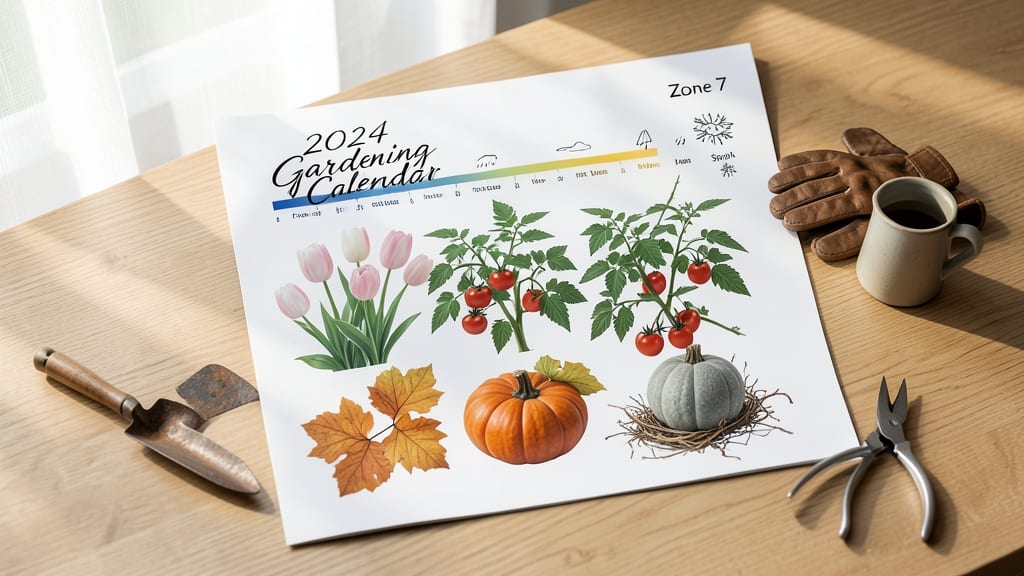
A Zone 7 gardening calendar organizes planting around key frost dates—last spring frost typically arrives between March 15–April 15, while first fall frost usually hits October 15–November 15—so you can align warm-season crops with the frost-free window and cool-season plants with early spring or late fall planting.
This calendar isn't just about dates—it's about matching plants to their ideal growing conditions. 🌱 Zone 7 spans two USDA subzones (7a and 7b), meaning some areas experience earlier frosts than others, so I always adjust my schedule based on local microclimates.
For instance, higher elevations might see frost a week earlier than valley areas, while urban heat islands can extend the growing season by 10 days or more. The key is tracking your specific frost history over 3-5 years to fine-tune your planting timeline.
What many gardeners miss is that soil temperature matters just as much as air temperature. Warm-season crops like tomatoes need soil at 60°F+ before planting, while cool-season crops like spinach thrive in 40-60°F ranges.
I use a soil thermometer to verify readiness—this prevents premature planting that could lead to frost damage. The calendar becomes even more powerful when paired with a seed-starting schedule, since many vegetables need 6-8 weeks indoors before transplanting.
💡 In This Article
- Understanding Zone 7 Frost Patterns and Plant Hardiness
- Monthly Zone 7 Gardening Tasks by Season
Understanding Zone 7 frost patterns and plant hardiness
Zone 7's frost dates aren't fixed—they shift based on weather patterns and geography. The 10-year average for last spring frost falls between March 15–April 15, but individual years can vary by 2-3 weeks either side.
This variability comes from large-scale weather systems like the Polar Jet Stream, which can push cold air southward unexpectedly. For example, Atlanta's 2021 spring frost occurred on March 22, while Dallas saw its last frost on March 10—both within Zone 7 but with 12-day differences.
The USDA's Zone 7a (-5°F to 0°F) and 7b (0°F to 5°F) distinction matters because it determines which plants survive winter. Zone 7a areas (like northern Virginia) may lose tender plants like tomatoes to winter, while Zone 7b (like central Texas) can support evergreen azaleas year-round.
The 30-year average minimum temperature defines these zones, but microclimates create exceptions—south-facing slopes warm 5-10°F faster than north-facing areas, potentially extending the growing season by 2-3 weeks.
Elevation changes frost dates dramatically. In the Appalachian Mountains, every 1,000 feet gain drops temperatures by 3.5°F, often pushing frost dates 1-2 weeks earlier than valley areas. For instance, Asheville (Zone 7a) at 2,200 feet may see frost 10 days earlier than Charlotte (Zone 7b) at 700 feet.
Gardeners in hilly regions should plant frost-sensitive crops 2 weeks later than their zone's average to avoid damage.
Plant hardiness isn't just about survival—it's about growth timing. Cool-season crops like kale or broccoli can handle light frosts (28°F) and even improve flavor, while warm-season plants like peppers die at 32°F.
The 10-day rule applies here: Wait until the average minimum temperature stays above 50°F for 10 consecutive nights before planting heat-lovers. This prevents blackheart disease in lettuce or stunted growth in tomatoes.
Technology helps track these patterns. Apps like PlantNet or Gardenate use crowd-sourced frost data, while NOAA's Climate Data provides historical records. I cross-reference these with my own 3-year frost log to spot trends.
For example, if my garden shows fall frosts arriving 5 days earlier than the average, I adjust my pumpkin harvest by 1 week earlier each year.
Don't overlook soil temperature—it's the real predictor of planting success. Warm-season crops need soil at 60°F+ for 2 weeks straight before planting. A soil thermometer reveals when your garden is truly ready, even if air temps suggest otherwise.
This is why March-planted tomatoes in Zone 7 often fail—they rot in 50°F soil.
Pro tip: Use frost cloth to extend warm-season growing by 2-4 weeks in spring/fall. It adds 5-10°F protection and lets you plant earlier or harvest later. For example, I've successfully grown basil until November 15 in Zone 7b using frost cloth, when unprotected plants would die by October 20.